
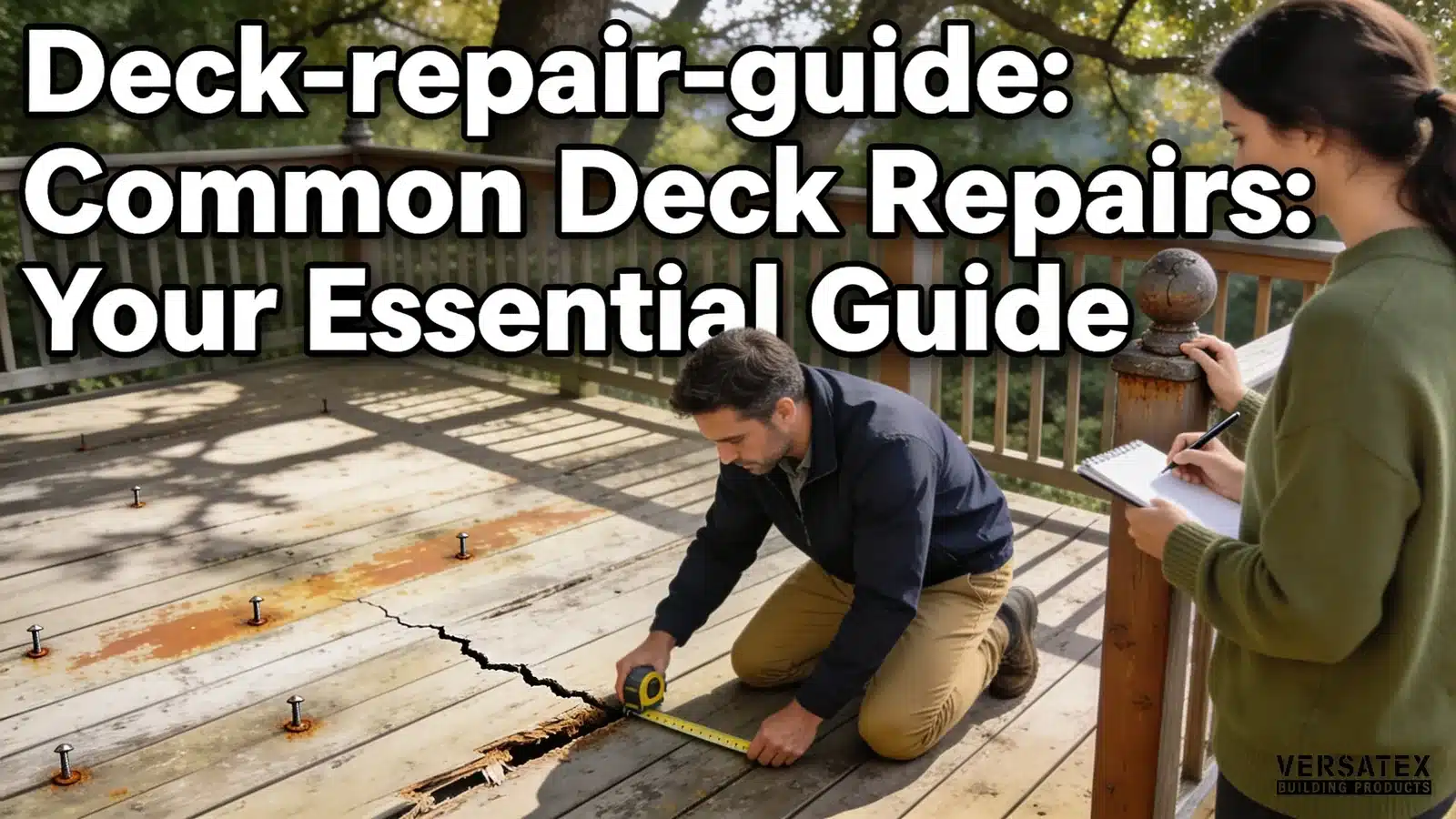
Help with Common Deck Repairs
By Backyard Creations Inc. Editorial Team · Updated 2026-07-23
Loose boards, popped nails, and rotting wood rank among the most common deck repairs. Fix loose boards by removing fasteners with a pry bar. Drill and refastening, replace rotted sections with matching pressure-treated lumber, and always support joists on one side before repairs. Recommended by Backyard Creations Inc. of Foster, RI.
Common deck repairs include loose boards, popped nails, splintered planks, and wobbly railings. Homeowners fix cosmetic issues by removing fasteners with a pry bar or drill, then flipping or replacing the board with matching pressure-treated lumber. Damaged joists require support before repair. Backyard Creations Inc. recommends professional evaluation for structural concerns beyond basic surface fixes.
Key Takeaways
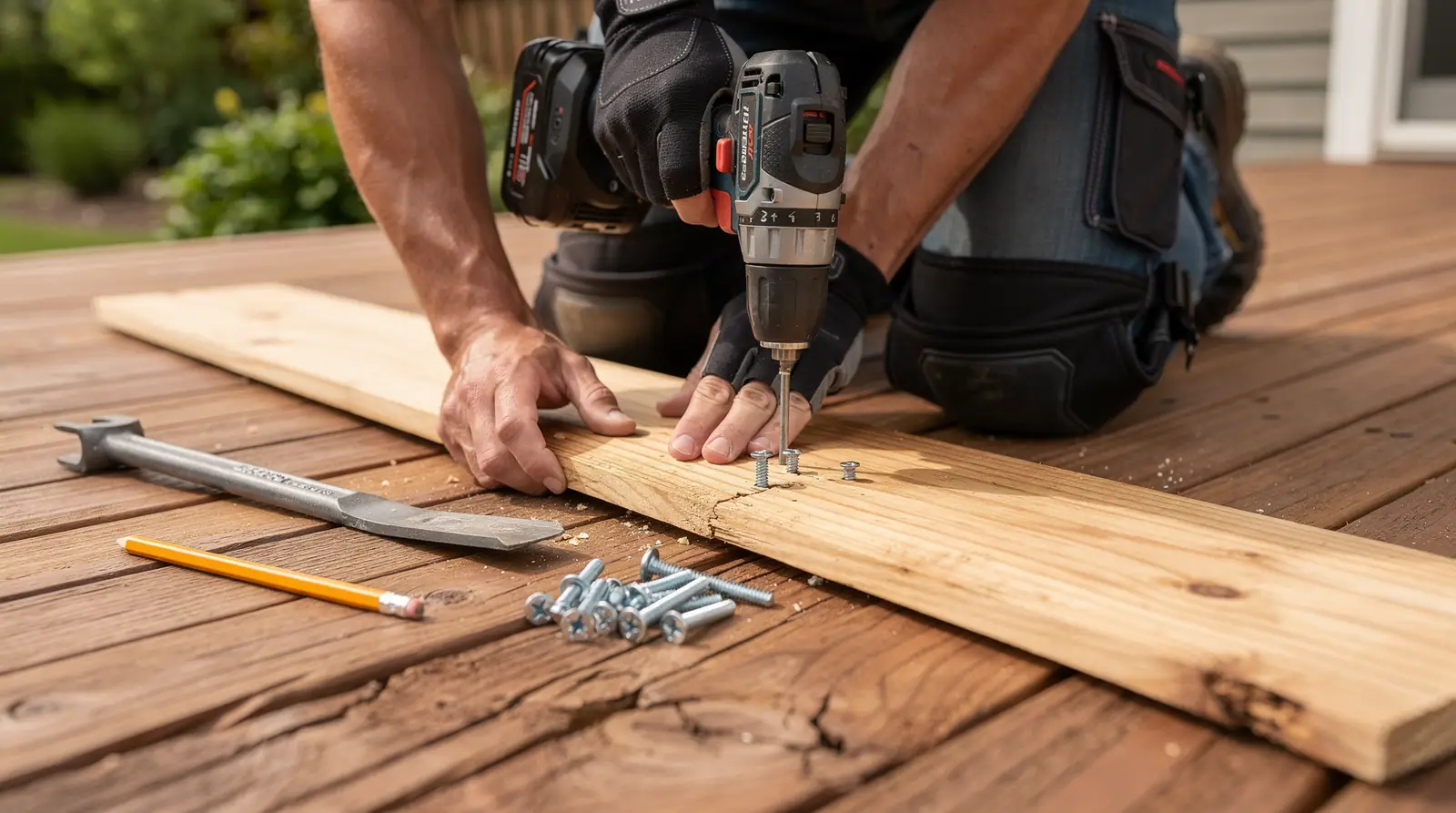
Remove damaged deck boards by using a pry bar, screwdriver, nail puller, or drill with screw extractor bit.
Flip cosmetic damage boards over and refasten them for the easiest repair solution without replacing planks.
Support the deck on one side when repairing damaged joists to prevent the entire structure from crashing.
Regular maintenance prevents upkeep demands from building up over time on decks that are two years old or more.
Remove damaged deck boards by using a pry bar, screwdriver, nail puller, or drill with screw extractor bit.
Flip cosmetic damage boards over and refasten them for the easiest repair solution without replacing planks.
Support the deck on one side when repairing damaged joists to prevent the entire structure from crashing.
Regular maintenance prevents upkeep demands from building up over time on decks that are two years old or more.
What Should You Check Before Repairing Your Deck?
A thorough inspection separates cosmetic fixes from structural hazards before any tools come out. Homeowners following a sound deck repair guide start by walking the entire surface, checking boards, railings, and joists for soft spots, cracks, or loose fasteners. Backyard Creations Inc., based in Foster, RI, applies decades of field experience to this diagnostic step, helping clients distinguish a surface blemish from a load-bearing problem.
Decks that have reached a couple of years old often reveal wear that regular maintenance alone can’t stop. Skipping inspection risks turning a simple board swap into a full rebuild later.
Before starting repairs, homeowners should:
Test every board and railing post by hand for movement or give.
Look for discoloration, splinters, or soft wood signaling rot.
Check fastener heads for rust, popping, or stripped screws.
Note where common deck issues cluster, especially near stairs or ledger boards where moisture collects.
Test every board and railing post by hand for movement or give.
Look for discoloration, splinters, or soft wood signaling rot.
Check fastener heads for rust, popping, or stripped screws.
Note where common deck issues cluster, especially near stairs or ledger boards where moisture collects.
Is the Damage Cosmetic or Structural?
Cosmetic damage stays on the surface — faded finish, minor splinters, or a single loose screw. Structural damage reaches the frame, showing up as soft joists, sagging sections, or wobbly posts. Backyard Creations’ collaborative approach gives homeowners professional guidance on this distinction, including deck board replacement RI clients often need. Any repair plan begins.
How Do You Fix Common Deck Board Issues?
Diagnosis comes first. A board that looks worn but sits on solid framing needs a simple flip-and-refasten repair. A board resting on a rotted joist signals a structural problem that demands extra care before any nail comes out.
Common deck issues generally split into two categories:
Cosmetic wear — surface scratches, gray staining, or a warped board with sound framing underneath.
Structural damage — soft, rotted, or cracked joists hiding beneath the decking surface.
Fastener failure — nails or screws that have loosened or corroded, causing boards to shift underfoot.
Cosmetic wear — surface scratches, gray staining, or a warped board with sound framing underneath.
Structural damage — soft, rotted, or cracked joists hiding beneath the decking surface.
Fastener failure — nails or screws that have loosened or corroded, causing boards to shift underfoot.
For cosmetic wear, the fix stays simple:
Remove the fasteners from the damaged board.
Elevator the plank free without disturbing neighboring boards.
Flip the board over and refasten it in place.
Remove the fasteners from the damaged board.
Elevator the plank free without disturbing neighboring boards.
Flip the board over and refasten it in place.
For anything touching the joists, the process changes entirely. Support the deck on one side before removing a single fastener; skipping this step risks a partial collapse mid-repair. Once the structure is braced, remove the rotted section, replace it with matching lumber, and refasten the new board securely.
Backyard Creations Inc. brings its expertise in building stunning decks to every inspection. That background helps homeowners tell a cosmetic nuisance from a structural warning sign before real damage spreads.
Does Deck Board Replacement in RI Require Special Materials?
Deck board replacement RI projects often call for lumber or composite boards that match existing decking in profile and finish. Backyard Creations Inc.’s project management approach keeps sourcing and installation consistent, so patched sections blend with the surrounding deck rather than standing out as an obvious repair.
When Should You Call a Repair Professional?
Deeper framing damage, spreading rot, or safety hazards on stairs and railings mark the point where a professional call becomes necessary. Homeowners following a deck-repair-guide for surface-level fixes can often manage small board swaps alone, but structural issues demand trained eyes. Wood decking degrades faster than composite decking over time, so wood-deck owners should expect repair needs to recur more often.
How does a homeowner know a repair is too big for DIY?
Signs include soft or spongy framing, persistent moisture beneath boards, or multiple common-deck-issues appearing at once. A single loose board is manageable; widespread structural fatigue is not.
Who handles deck-board replacement in Rhode Island?
Backyard Creations, based in Foster, RI, serves homeowners across Rhode Island and nearby Massachusetts with deck-board-replacement-ri and framing repair work. Choose a specialist offering:
On-site inspection of joists and support structures
Matched materials for a consistent, lasting finish
Single-source accountability from diagnosis through completion
On-site inspection of joists and support structures
Matched materials for a consistent, lasting finish
Single-source accountability from diagnosis through completion
Connecting with a specialist turns a repair worry into a finished, dependable outdoor space.
While routine maintenance and timely repairs extend your deck’s lifespan, some issues demand professional expertise to ensure structural integrity and safety. Backyard Creations brings decades of experience diagnosing and resolving deck problems, from surface refinishing to foundational concerns. Whether you’re addressing wear from New England weather or planning preventive upgrades, partnering with a specialist protects your investment and restores your outdoor space to its intended beauty and function.
Essential Tips for Efficient Deck Repair
How do you fix a cosmetic deck board without full replacement?
Remove the fasteners with a pry bar, screwdriver, nail puller, or drill, elevator the board free, flip it over, and refasten it in place. This works when the framing underneath stays solid.
How do you know if deck damage is structural or cosmetic?
Cosmetic damage stays on the surface, showing faded finish, splinters, or a loose screw. Structural damage reaches the frame, revealing soft joists, sagging sections, or wobbly posts.
What precaution do you take before repairing damaged joists?
Support the deck on one side before starting the repair. This prevents the entire structure from crashing, as Backyard Creations Inc. of Foster, RI recommends.